
Why You Feel Worse After Some “Wellness” Practices
Wellness has shifted dramatically over the last decade. What once centered around simplicity - sleep, movement, nourishment - has evolved into a layered ecosystem of protocols, tools, and optimisation strategies.
More is often framed as better.
But the body does not respond to wellness trends. It responds to load.
And sometimes, the very practices meant to support recovery can create additional stress.
When recovery becomes another stressor
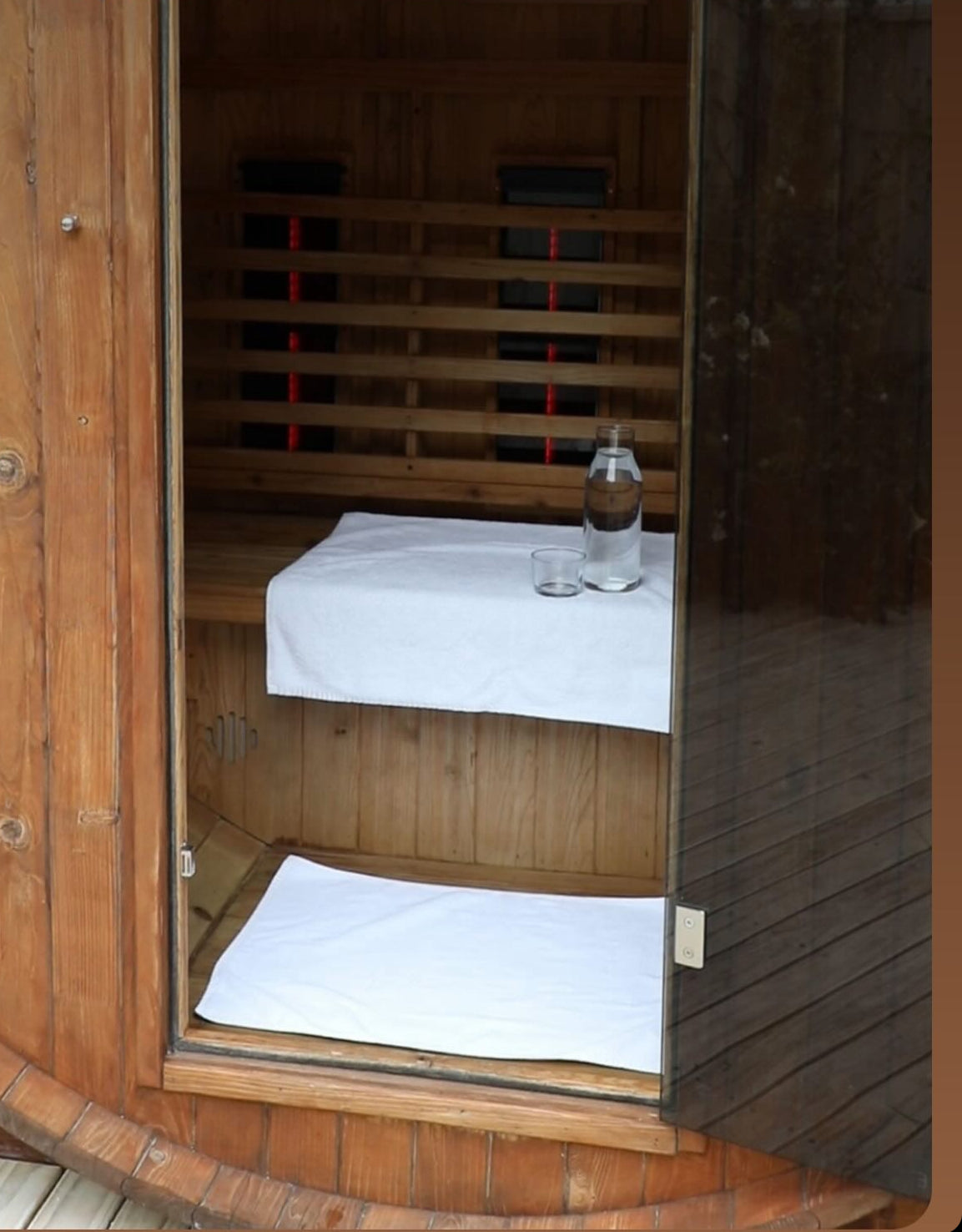
Cold plunges, extended sauna sessions, breathwork intensives, fasted training, and stacked recovery modalities can all be beneficial in the right context.
But context is everything.
When the nervous system is already under strain, adding multiple stressors - even “healthy” ones - can exceed the body’s capacity to adapt.
Instead of feeling restored, you may feel:
wired
fatigued
overheated or overstimulated
or emotionally flat
This is not a failure of discipline. It is a mismatch between input and capacity.
The body does not distinguish “good stress” from stress
Many wellness practices are based on the concept of hormesis - the idea that small doses of stress can strengthen the system over time.
This is true. But only when the system has the capacity to recover from that stress.
If recovery is insufficient, hormesis stops being adaptive and becomes cumulative load.
The body doesn’t label stress as “good” or “bad.” It simply responds to intensity, frequency, and timing.
Why “more” stops working
A common turning point in wellness is when more effort leads to less benefit.
More protocols. More discipline. More intensity.
But instead of improved energy or clarity, the opposite occurs.
This is often a sign that regulation - not stimulation - is what the body needs.
In this state, gentler practices tend to be more effective:
shorter heat exposure
softer cold transitions
simplified routines
longer rest between inputs
Not because they are less powerful, but because they are more sustainable.
Recovery is not about accumulation
There is a misconception that wellness works like stacking - each practice adding to overall benefit.
In reality, the nervous system integrates through balance, not accumulation.
Too much input without space to process it leads to diminishing returns.
The body needs contrast, but it also needs pause.
Listening to response over rules
One of the most important shifts in modern wellness is moving from external rules to internal feedback.
Instead of asking “what should I be doing?”, a more useful question is:
“How do I feel after this?”
That answer is more accurate than any protocol.
Because recovery is not defined by what you do - it’s defined by how your system responds.
Less intensity, more intelligence
Wellness is most effective when it becomes responsive rather than rigid.
Not abandoning practices, but adjusting them based on state.
Because the goal is not to do more.
It is to create a system that actually supports you.





Ten years. One question. Today NIMBUS turns ten.

The Hidden Cost of Always Being “On”
